
Smoke Detector Placement Requirements in Minnesota

Key Takeaways
- Minnesota requires smoke alarms inside every bedroom, outside each sleeping area, and on every story including basements.
- New construction and remodels with exposed framing require hardwired, interconnected alarms. Battery-only units do not meet code in those situations.
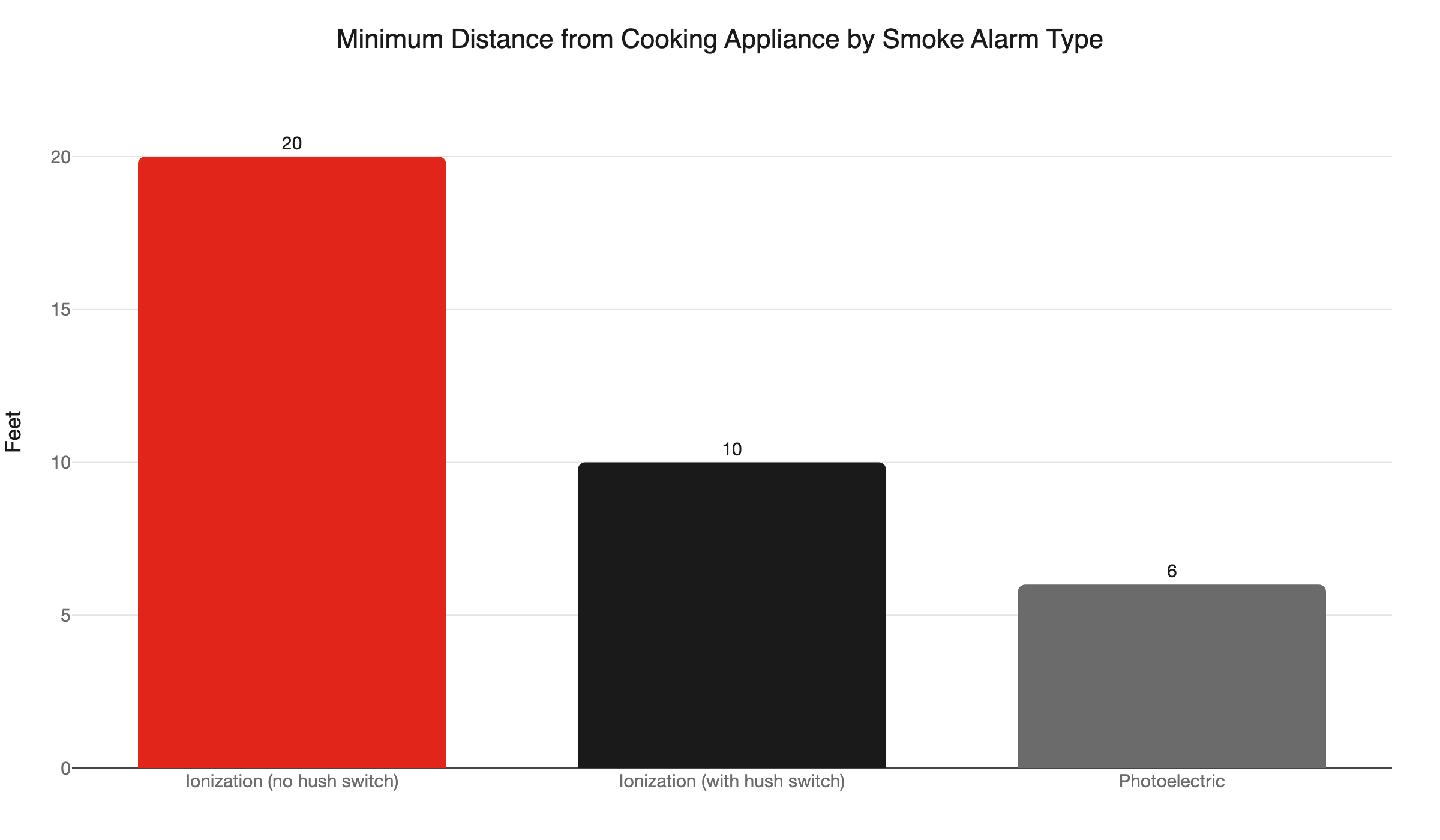
- Ionization alarms must sit at least 20 feet from a cooking appliance (10 feet if the alarm has a hush switch). Photoelectric alarms need only 6 feet.
- Minneapolis and Saint Paul both have Truth in Sale of Housing (TISH) requirements. Saint Paul explicitly requires a hardwired alarm in the bedroom hallway before a home can sell.
- Replace all smoke alarms after 10 years of use, or when they fail a monthly test.
- A licensed electrician is required for any hardwired or interconnected smoke alarm installation under Minnesota law.
What Are the Smoke Detector Placement Requirements?
Quick answer: NFPA 72 sets the national baseline. Minnesota layers state statute and residential code on top of it. At minimum, alarms go inside every bedroom, outside each sleeping area, and on every floor including basements. Ceiling mounts must be at least 4 inches from any wall. Wall mounts must sit within 12 inches of the ceiling.
The National Fire Protection Association’s NFPA 72 is the standard most electricians and inspectors reference. It is a national floor, not a ceiling. Minnesota’s own code often goes further.
Here is what NFPA 72 requires for mounting position:
- Ceiling mount: At least 4 inches from any wall.
- Wall mount: Within 12 inches of the ceiling.
- Hallways: Within 21 feet of any bedroom door. Space alarms no more than 30 feet apart in long hallways.
- Peaked ceilings: Within 36 inches horizontally of the peak, but not closer than 4 inches vertically from the peak.
Those rules govern where on the ceiling or wall to mount the device. The next section tells you which rooms require an alarm in the first place.
Which Rooms Require a Smoke Alarm in Minnesota?
Quick answer: Minnesota Residential Code Section R314 requires alarms inside every sleeping room, outside each sleeping area, and on every story including basements. Habitable attics need coverage too, as do uninhabitable attics if a stairway accesses them. Most Twin Cities homes need at least five or six alarms.
Minnesota Statute 299F.362 is the controlling law. It requires every dwelling unit to have smoke alarms meeting the State Fire Code.
Section R314 of the Minnesota Residential Code specifies the required locations:
- Inside every sleeping room.
- Outside each separate sleeping area, in the immediate vicinity of the bedrooms.
- On each story of the home, including basements.
- In habitable attics. Uninhabitable attics and crawlspaces are exempt unless a stairway leads to the attic, in which case an alarm is required there too.
A two-story home with three bedrooms and a finished basement needs alarms in all three bedrooms, in the hallway near those bedrooms, on the main level, and in the basement. That is at least five or six alarms before you count additional hallways or a habitable attic.
If you recently finished a basement or added a bedroom, you added a required location. Verify your coverage before calling it done.
Do I Need a Hardwired Smoke Detector or Can I Use Batteries?
Quick answer: It depends on when and what kind of work was done. New construction always requires hardwired alarms in Minnesota. A remodel or basement finish that exposes framing also triggers the hardwired-and-interconnected requirement. Simple like-for-like replacements in an existing home can use battery power.
Minnesota Statute 299F.362, Subdivision 3a states that every smoke alarm in new construction must be attached to a centralized power source. That means hardwired, with battery backup.
The remodel trigger matters for homeowners finishing a basement or building an addition. Per City of Blaine’s basement finish guidance, which reflects the statewide rule: when framing is exposed during a remodel, alarms in that space must be hardwired with battery backup and interconnected with all other hardwired alarms in the home. When framing stays closed, battery-only units are acceptable, and wireless interconnection counts.
Hardwired means the alarm draws power from your home’s electrical system. It still has a battery backup for power outages. This is not a DIY install. Running wire inside walls and connecting to the panel requires a licensed electrician. Our post on DIY electrical dangers explains what can go wrong and why permits exist.
What Is Smoke Detector Interconnection and Why Does It Matter?
Quick answer: Interconnected means when one alarm detects smoke, every alarm in the house sounds simultaneously. This gives you more warning time, especially in multi-story homes where a basement fire may not trigger an upstairs alarm before conditions worsen significantly.
Interconnection is required in new construction and in any remodel where framing is exposed. In older homes where hardwired interconnection was never installed, wireless interconnection using compatible alarms is a code-compliant alternative when the framing stays closed.
The practical value is real. A fire starting in the basement at 2 a.m. may not trigger a bedroom alarm before smoke reaches that level. An interconnected system sounds every alarm in the house the moment any unit detects smoke. That extra response time matters.
If you are finishing a basement or adding living space, budget for hardwired, interconnected alarms. It is not optional under Minnesota code when framing is exposed.
Room-by-Room Placement Guide
Bedrooms
Place the alarm on the ceiling at least 4 inches from any wall. If the room has a ceiling fan, position the alarm away from the fan’s air circulation path. Moving air can delay smoke from reaching the sensing chamber.
Hallways
Mount within 21 feet of every bedroom door. In longer hallways, space alarms no more than 30 feet apart. A long hallway connecting bedrooms on both ends may need two alarms.
Kitchens
The kitchen is where placement errors cause the most nuisance trips and bad workarounds. The NFPA 72 standard, as detailed in Structure Tech’s Minnesota guide, sets these minimum distances from a cooking appliance:
- Ionization alarms: At least 20 feet from a cooking appliance. If the alarm has a silence or hush switch, 10 feet is acceptable.
- Photoelectric alarms: At least 6 feet from a cooking appliance.
See the chart in this post for a quick visual comparison of those distances. Photoelectric technology suits kitchens and cooking areas better because it responds faster to slow, smoldering fires and triggers fewer nuisance alarms from cooking steam.
Bathrooms
Keep alarms at least 3 feet from any door leading to a room with a bathtub or shower. Steam from a shower triggers nuisance alarms. This rule comes from Minnesota Residential Code R314.
Basements
An alarm is required on every story, and basements count. Place it on the ceiling at least 4 inches from a wall. If the basement was finished with exposed framing, the alarm must be hardwired and interconnected with the rest of the system.
Peaked or Cathedral Ceilings
Mount within 36 inches horizontally of the peak, but not closer than 4 inches vertically from the peak. Dead air near the very top of a cathedral ceiling can slow smoke from reaching a flush-mounted alarm.
Does Selling Your Home in Minneapolis or Saint Paul Change the Rules?
Quick answer: Yes. Both cities require a Truth in Sale of Housing (TISH) inspection before you can sell. Smoke alarm deficiencies are required repairs, not optional disclosures. Saint Paul specifically requires a hardwired alarm in the bedroom hallway, and that must be installed by a licensed electrician.
Minneapolis TISH
Minneapolis requires smoke alarms in a common area on every level, including an uninhabitable attic if a stairway accesses it. Missing or nonfunctional alarms appear on the TISH report as required repairs. They must be corrected before the sale closes.
Saint Paul TISH
Saint Paul requires at least one hardwired smoke alarm in the hallway outside the bedrooms. If your home does not have one, the city requires installation before the sale. That is an electrician’s job. It involves running wire to your panel, not dropping in a battery unit.
If you are listing a home in Saint Paul and have never had hardwired alarms installed, call before the TISH inspection. Discovering the problem during inspection costs more and takes longer to resolve than addressing it first. Reach us at 763-200-5956 or book online.
When Do You Need a Licensed Electrician for Smoke Detectors?
Quick answer: Any time the work involves hardwired alarms. Replacing a battery-operated alarm with an identical battery-operated alarm is a homeowner task. Installing hardwired alarms, interconnecting a system, or running new wiring for a TISH-required alarm all require a licensed electrician under Minnesota law.
Here is a clear breakdown:
Homeowner can handle:
- Replacing a battery-only alarm with another battery-only alarm of the same type.
- Testing existing alarms and swapping batteries.
- Installing a wireless alarm that does not connect to home wiring.
Requires a licensed electrician:
- Installing any hardwired alarm.
- Connecting alarms to the home’s electrical system.
- Interconnecting multiple alarms through home wiring.
- Running new wiring for a TISH-required alarm in Minneapolis or Saint Paul.
- Adding alarms during a basement finish or addition where framing is exposed.
Minnesota’s electrical code requires a permit for hardwired alarm work. Our post on electrical permits in Minnesota explains what triggers a permit requirement and what happens when work is done without one.
We pull permits, do the work correctly, and show up on time. That is what “America’s On-Time Electrician(R)” means in practice for Twin Cities homeowners.
Rental Properties: Who Is Responsible?
Quick answer: The property owner is responsible for smoke alarm maintenance under Minnesota Statute 299F.362, Subdivision 5. Tenants must notify the owner within 24 hours of finding a nonfunctioning alarm. Disabling a smoke alarm that results in damage or injury is a misdemeanor in Minnesota.
Subdivision 5 places smoke alarm maintenance on the owner, not the tenant. The owner must ensure alarms are present, functional, and properly placed at move-in.
Subdivision 5a requires tenants to report nonfunctioning alarms to the owner within 24 hours of discovering the problem.
Subdivision 6b makes willfully disabling a smoke alarm a misdemeanor when it results in property damage or injury.
If you own rental property in the Twin Cities and have not recently verified alarm placement and function, that is a liability worth fixing before a tenant surfaces the problem first.
When Should You Replace Your Smoke Alarms?
Quick answer: The Minnesota State Fire Marshal recommends replacing smoke alarms after 10 years of use or when they fail a monthly test. Check the manufacture date on the back of each unit. If it is more than 10 years old, replace it.
Alarms degrade over time. The sensing chamber collects dust and the electronics age. An alarm that looks fine on the outside may not reliably detect smoke inside.
Signs an alarm may be failing before the 10-year mark:
- It chirps intermittently even with a fresh battery.
- It does not respond when you press the test button.
- It triggers nuisance alarms with no smoke present.
- The plastic housing is yellowed or brittle.
If your home has hardwired alarms past their service life, call an electrician. Swapping hardwired alarms means working with live wiring at the junction box. Our smoke detector installation service covers full replacement, interconnection checks, and testing.
What About Carbon Monoxide Detectors?
Quick answer: CO detectors are a separate requirement from smoke alarms under Minnesota Residential Code Section R315. Homes with fuel-burning appliances or attached garages must have them. Combination units that handle both smoke and CO are available and code-compliant.
CO placement has its own rules. Placing a CO detector near the floor is a common mistake: carbon monoxide mixes throughout room air rather than pooling low, but floor placement can delay detection in some configurations. Manufacturer instructions and code requirements govern proper height.
If we are already at your home for smoke alarm work, it takes only a few minutes to audit CO detector coverage at the same visit. Ask us when you call.
What Northern Mister Sparky Can Do for You
We handle every aspect of smoke alarm compliance for Twin Cities homeowners:
- Code review before a basement finish or addition to identify the hardwired trigger.
- Hardwired alarm installation with proper interconnection and battery backup.
- TISH prep for Minneapolis and Saint Paul sales, including installation and documentation.
- Full-home audits to verify placement, test function, and flag units past their service life.
- Rental property compliance for owners who need written verification of code-compliant coverage.
We are locally owned and operated in the Twin Cities. We know the local building departments and what inspectors look for. No malarky, no surprises.
Call 763-200-5956 or book online to schedule. We are “America’s On-Time Electrician(R)” and we back every job with the UWIN(R) 100% satisfaction guarantee.
Frequently Asked Questions
How many smoke detectors does a Minnesota home need? +
Does Minnesota require hardwired smoke detectors? +
Can I install my own smoke detector in Minnesota? +
Need an electrician now?